Why Public Rooms Need a Booking Plan
A public room booking plan helps you choose a suitable space, make a clear request and avoid surprises about access, equipment, timing and shared use.
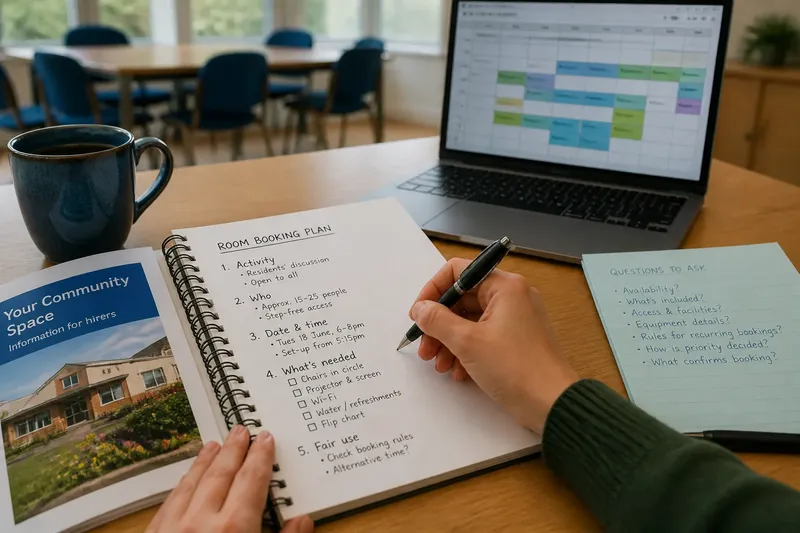
The common mistake with a public room booking is asking only, “Is it free?” A time may be open on the calendar but unsuitable for your group, inaccessible at the hour you need, or unavailable with the equipment you assumed was included. A clear public room booking plan helps you check those details before you request a slot, while giving staff a fair way to serve different groups.
Before contacting a council, library, community centre or other venue, use these points to work out what you need and what to confirm. The booking process is not just a form: it is a way to match people, purpose and space without leaving important arrangements to guesswork.
1. What will happen in the room?
Describe the activity in plain language. “A residents’ discussion about the shared garden” tells the venue more than “meeting”, while “quiet study session” signals different needs from a lively children’s activity. A useful description can help staff identify room suitability, relevant conditions and any competing use that might affect the booking.
Be clear about whether the gathering is open to the public, limited to members, or by invitation. Say if you expect people to arrive without registering, if the group will collect donations, or if you plan to sell items. These details can affect the type of room or booking route available. Don’t disguise a commercial or private event as a casual meeting to get around the process.
Think, too, about what participants will do: sit in a circle, listen to a speaker, work at tables, or move around. Explain the activity rather than choosing a layout before you know what the venue permits.
2. Who needs to use the room?
Give a realistic attendance range if you can, and distinguish likely attendees from the people organising the session. A room that appears ample for a small committee may be awkward if extra residents arrive. Conversely, requesting the largest space for a modest group can take a useful slot away from another community activity.
Consider who might face barriers to taking part. Ask whether the route from the entrance is step-free, whether an accessible toilet is available, and whether the room has an induction loop or another communication aid if needed. If participants may need a quieter space or room to move around, tell the venue early. A booking request should describe the access needs without asking individuals to disclose more personal information than necessary.
Say you are arranging a residents’ discussion and expect a small group, but a few people may bring mobility aids. Asking about the step-free route, toilet access and seating layout before requesting a room lets you identify a suitable option instead of discovering a barrier on arrival.
3. Which date and times do you actually need?
Separate the event’s start and finish from the time needed to prepare and clear the room. If people need to set out chairs, connect a laptop or tidy up afterwards, ask whether that time must be included in the booking. A calendar slot that covers only the advertised meeting can leave organisers rushing before the next group arrives.
Offer a preferred time and a realistic alternative where possible. Some shared rooms have recurring users, staff availability limits or periods when the building is closed. Flexibility can help the venue suggest an available slot, but don’t accept a time that would prevent your participants from attending.
Ask how long a booking can be held, whether recurring sessions require separate requests, and how far ahead the venue accepts them. If a date matters because of a connected event, explain that plainly. Check whether the booking includes the whole building or only the room; opening hours and room availability are not always the same thing.
4. What does the room include?
Make a short list of what your event needs, then ask what is supplied and what must be arranged separately. Useful items to check include:
- Tables and chairs, including whether staff place them or users arrange them.
- A projector, screen, display cable or suitable connection for your device.
- Wi-Fi availability and any sign-in or access restrictions.
- A whiteboard, flip chart or other presentation materials.
- Kitchen access, drinking water or permission to bring refreshments.
- Storage space for materials before or after the session.
Equipment descriptions can be vague. “Projector available” does not tell you whether the right cable is supplied or whether you may use your own device. Ask focused questions about the item your activity depends on, and have a simple alternative if the venue cannot provide it. Don’t assume that a room booking includes staff help with technical setup.
5. How does the venue share room time fairly?
Public rooms often serve groups with different purposes and patterns of use. A booking plan can set a consistent route for requests, explain how priority is handled, and reduce the chance that one group informally occupies a popular slot. Check whether the venue has rules about recurring bookings, maximum session length, community eligibility or how conflicting requests are considered.
Ask what information the venue uses to make a decision, and whether a provisional hold differs from a confirmed booking. If the date is declined, find out whether staff can suggest another room or time. A clear process should make it possible to understand what to do next without treating a refusal as a judgement on the value of your activity.
Where requirements depend on the venue’s published conditions, equipment instructions or local rules, check those directly before confirming arrangements.
6. What should you ask before submitting a request?
How do I find out whether the room is available?
Use the venue’s stated booking route, such as its room calendar, online form or named contact. If availability is not shown publicly, give your preferred date and a workable alternative, then ask when you can expect a response.
What information belongs in a booking request?
Include the activity, expected attendance, preferred date and times, set-up needs, access requirements and a contact person. Mention any detail that may affect room choice, such as public attendance, refreshments or use of presentation equipment.
When is a room booking confirmed?
Ask whether you need a written confirmation, an approval email or another formal notification before telling participants the venue is settled. Keep the confirmation with the room details and check it for the date, time, location and any stated conditions.
What if the group’s needs change?
Contact the venue as soon as the attendance, activity or equipment request changes. Ask whether the revised plan still fits the room and whether the booking record needs updating, rather than assuming a small change is automatically covered.
7. What should you confirm once the slot is offered?
Read the offer carefully before accepting. Confirm the room name and entrance, the time you may arrive, the time you must leave, and how to gain access if the main desk is closed. Ask who to contact if the door is locked or the room is not ready, and whether the building has a closing routine you need to follow.
Check how to cancel or change the booking, and whether the venue expects notice if plans fall through. This gives staff a chance to offer the room to someone else. If you will handle keys, collect them only through the stated process and return them as directed; don’t pass access arrangements casually between participants.
Save a concise confirmation that includes the booking contact and any agreed equipment or access arrangements. Share only the details organisers need, and tell participants where to go and when they may enter.
8. How can you leave the room ready for others?
Before the event, find out what the venue expects for furniture, rubbish, dishes and personal belongings. At the end, restore the agreed layout, take away materials and report anything that needs attention. If another group follows, clear the room within the booked time rather than treating the handover as spare time.
Tell the venue if the space did not meet an agreed need, or if an item was missing. Keep the message specific: name the room, describe what happened and say what would help next time. That gives staff practical information to consider when they manage future bookings.
A sound public room booking plan starts with the activity and the people who need to take part, then checks time, access, equipment and venue conditions before the date is announced. For your next public room booking, write those needs in one clear request and ask for confirmation of the details that matter most. That small habit makes it easier for your group to arrive prepared and for the next users to find the room ready.