How to Comment on a County Consultation Without Missing the Point
County consultation responses are more useful when they address the stated question, identify a practical effect and reach the right team before the deadline.
The common mistake in a county consultation is sending a general complaint that never answers the question being asked. It costs residents a chance to explain a specific effect, and leaves the council with less useful feedback. A focused county consultation response can connect a local experience to the decision under consideration.
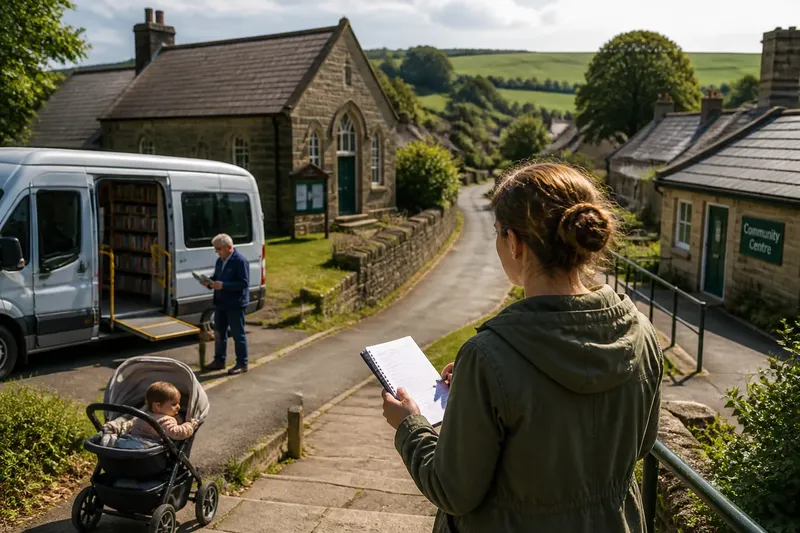
Imagine a county asks residents how a library should provide a mobile service to outlying villages. The consultation form asks which locations need visits and what access barriers residents face. Rather than writing only that “the service matters”, describe the affected place, the problem and the change that would help.
What is the consultation asking you to answer?
Read the consultation notice and questions before drafting a response. Note the topic, options under consideration, closing date, permitted ways to reply and any limits on what the council is asking. A consultation might seek views on a service’s opening arrangements, not on an unrelated building project.
Separate the council’s stated question from your own concern. If the form asks about village locations, explain which locations are difficult to reach and why. If you have a different issue, raise it separately with the relevant service team rather than forcing it into an answer that does not fit.
Write down the question in your own words before you respond.
How can you make your response specific?
Give the council enough detail to understand the effect without burying the point. Name the place or service, describe the obstacle, and state what practical change you support. Where useful, mention the days or circumstances involved, but do not include personal details that are not needed to explain your view.
In the invented mobile-library situation, a resident might say that a steep route from the bus stop makes the proposed village hall difficult to reach with a pushchair, and suggest stopping near the accessible community centre instead. That response identifies a location, an observable barrier and an alternative for the council to assess.
A clear response does not need to be long. Make one main point, then add relevant context.
What should you check before sending it?
Use this checklist to make sure your feedback can be understood and considered:
- Check the consultation title and scope; if your point answers the stated question, include it, and if not, send it separately to the relevant team.
- Check the closing date and submission route; if the consultation is open, use an accepted channel, and if it has closed, ask whether late feedback can still be recorded.
- Check that your response names the affected service or place; if it does, keep that detail, and if not, add it before submitting.
- Check that you have described a practical effect; if the effect is clear, proceed, and if it is vague, add the circumstance that causes the difficulty.
- Check whether you have proposed a workable alternative; if you have, explain why it addresses the issue, and if you have not, state what information or change you are asking the council to consider.
- Check for unnecessary personal information; if a detail does not help explain your view, remove it, and if the council needs a way to respond, provide only suitable contact details through its stated process.
Keep a copy of the submitted response and any confirmation message.
How can you respond if the options do not fit?
Do not select an option that misrepresents your view merely because it is the closest one. Use a free-text box, an “other” choice or the consultation’s contact route to explain what is missing. Make clear which part you support and which part you would change.
Say you support keeping a mobile library but think the proposed stops are too far from a particular village. State that distinction directly: you favour the service, but want the council to assess a closer stop. This gives the decision-makers a clear position instead of a misleading yes-or-no answer.
If there is no suitable place to explain, contact the named consultation officer and ask how to submit an additional comment.
What happens after you submit a county consultation response?
A response is input for consideration, not a promise that the council will adopt your preferred option. The council may group similar comments, assess practical implications and explain its decision through a later update. Check the consultation notice for how responses will be handled and where an outcome may appear.
For personal or sensitive information, follow the council’s published privacy guidance and avoid including details about other people without a sound reason. If your question concerns a formal complaint, an individual service problem or an urgent need, use the relevant service or complaints route as well; a consultation may not provide an individual remedy.
For the invented mobile-library consultation, suppose a resident’s starting point is that the draft route stops only at the village hall, while the community centre is closer to homes on the other side of the village. The resident checks that the consultation covers stop locations, then describes the two places and the walking access issue. They suggest assessing the community centre as an alternative, submit the response through the stated form before it closes, and save the confirmation. The resulting position is clear: the resident supports the mobile service but asks the county to consider a different stop; the council still has to assess that request.
Which questions do residents ask about consultation responses?
Can I send a response after the closing date?
Check the consultation notice or ask the named officer whether late comments can still be recorded. If the form has closed, do not assume an email will count as a formal consultation response.
Should I include personal details?
Include only what is needed to explain the effect of the proposal, and follow the council’s privacy instructions. If your concern involves a personal service case, contact the service directly rather than putting sensitive details in a general consultation reply.
Can a group submit one response?
Check whether the council accepts responses on behalf of a group and how it wants them submitted. Name the group’s position clearly, and distinguish it from any individual member’s separate view.
How do I find out what the council did with the feedback?
Look for the consultation’s published outcome or contact the team named in the notice. Ask where the council will explain how it considered the main issues and what action followed.
How should you describe your position to others?
Be precise about what you submitted and what remains unsettled. Say that you responded to the county consultation and describe the change you asked it to consider; do not imply that the council has accepted your suggestion unless it has said so.
A useful county consultation response names the question, the local effect and a practical request. Keep those three elements together, and your feedback will be easier for officials to interpret and for neighbours to understand.